This issue is all about the green energy transition, or replacing fossil fuels with carbon-free sources of energy. What is the best way to generate green energy? How much green energy can we generate? How fast can we make the transition?
____________________________________
Issue 2: Green energy & electric cars
Intro: Why does green energy produce so much toxic waste?
Chapter 1: Comparing wind, solar, nuclear & geothermal energy; mining waste
Chapter 2: The human and environmental costs of green energy mining
Chapter 3: Phasing out cars (even electric ones) to save the planet
Chapter 4: Your life would be way better if we phased out cars
Extra: Hydroelectric is not green energy
Bonus 1: Planet-saving green energy technology we foolishly never developed
Bonus 2: How did Congo (the world’s leading cobalt producer) get the way it is?
Bonus 3: The Congo Wars (1996-2003) and its millions of victims
_____
Issue 2 is available in written and podcast format
__________
In Chapter 1, we will start with a side-by-side comparison of the leading candidates for generating electricity without fossil fuels: nuclear, wind, and solar. Just for fun, we’ll throw in geothermal, which gets very little attention but is technically a potential source of green energy.
To determine the best form of green energy, we’ll look at the most important factors for a green energy transition. For example, are all of our candidates renewable – that is, impossible to exhaust as a source of energy? Are there any barriers to immediate large-scale implementation?
We’ll start with the most basic question: can each of our green energy candidates fully phase out fossil fuels?
Green energy duel #1: Can it phase out fossil fuels?
All of our green energy candidates require extremely high temperatures to manufacture. Solar panels need glass, and glass requires temperatures of over 2400 degrees F to manufacture. Nuclear, wind, and geothermal plants all need cement, which requires temperatures of over 2500 degrees F. All four of our candidates need steel, which requires temperatures of up to 3000 degrees F.
In other words, all of our green energy candidates require industrial heat. Unfortunately, we currently do not have a way of producing such high temperatures at an industrial scale except by burning fossil fuels (eg), and scientists have no plausible ideas for replacing glass, cement, or steel with equivalents that do not require industrial heat to manufacture. Fossil fuels are advantageous in this respect because they are, literally, a fuel. If burned in a power plant, they generate electricity; if burned in a blast furnace, they generate industrial heat. By contrast, none of our green energy candidates can function as a fuel: they can only generate electricity. The challenge, then, is to find a way to generate high industrial temperatures using electricity.
If we do not figure out a way to generate industrial heat via electricity, then none of our green energy candidates can be built without fossil fuels. This puts humanity in an extraordinary danger. Solar panels only last 30-35 years, wind turbines 20 years, nuclear plants 60-80 years, and geothermal plants 60-100 years. None of our candidates lasts forever, and we are currently unable to replace them without burning fossil fuels. Unless we figure out a way to generate high temperatures at an industrial scale, our green energy transition will start to unravel in 20 years, when our first wind turbines need to be retired, and wholly collapse within a century, when the last geothermal power plants reach the end of their useful lifetime.
One promising idea for fossil-fuel-free industrial heat is the electric arc furnace, which can generate very high temperatures using electricity. Electric arc furnaces have already been used successfully in recycling scrap steel, but that process nonetheless relies on fossil fuels to preheat the steel. Electric arc furnaces have not been successfully implemented for producing new steel, nor for glass or cement. Another promising approach is so-called “green hydrogen,” wherein electricity is used to split water into hydrogen and oxygen. When burned, hydrogen and oxygen generate high industrial temperatures. The underlying chemical reaction is straightforward, but green hydrogen has not been successfully implemented at an industrial scale. The major problem is that splitting water is extremely energy-intensive; in other words, we would have to build out extra gigawatts of electricity generation capacity for there to be enough electricity for all the green hydrogen needed to build replacements for our solar panels, wind turbines, and nuclear and geothermal power plants as they wear out. Other ideas, like using chemistry to turn agricultural products into a form that can generate high temperatures when burned, would also be extremely energy-intensive.
Aside from the steel and concrete of the power plant itself, geothermal has an additional need for fossil fuels: to dig to the necessary depths, the horsepower of fossil fuel-powered drills is required. Electric options simply don’t have the necessary power. In theory, electric equipment should be powerful enough to maintain holes dug by fossil fuel-powered machinery, but this is not certain.
It’s worth pausing to reemphasize what extraordinary danger we are in. With the collapse of civilization imminent, why are we not devoting more resources to finding a carbon-free source of high industrial temperatures? The irresponsibility of policymakers from the past is stark. Had policymakers taken climate change seriously in the 1980s, this problem could have been avoided altogether using the concept of a carbon budget, or the amount of fossil fuels that can be burned without triggering dangerous climate change. We could have budgeted enough fossil fuels to be able to indefinitely replace our solar panels, wind turbines, nuclear plants, and geothermal stations as needed. Instead, we blew through our carbon budget with wars of choice and private jets.
So far, not great: none of our candidates can actually phase out fossil fuels – at least within the bounds of existing technology.
Next, we’ll consider the all-important question of whether each form of energy can serve humanity as long as humanity is around.
Green energy duel #2: Is it truly renewable?
A source of energy is renewable if it cannot be exhausted. Our ideal green energy must be renewable because if we ever exhaust our capacity to make electricity, civilization will collapse.
Fossil fuels are not renewable – once all the oil, gas, and coal the planet has to offer has been extracted, it will take hundreds of millions of years to regenerate. Of course, if we actually used up all of Earth’s fossil fuels, it would trigger climate change so severe that the planet would become unlivable before that point.
By contrast, wind and solar energy are endlessly renewable. As long as humanity might be around, the sun will shine and the wind will blow.
Like fossil fuels, nuclear is not renewable. Nuclear power plants run on uranium, #92 on the periodic table. However, nuclear energy can only run on a rare form of uranium – uranium 235 (92 protons and 143 neutrons) – which is 142 times less abundant than uranium 238 (92 protons and 146 neutrons). There is no natural or human-made process to replace uranium 235: once we use up all the world’s mineable uranium, it’s gone forever.
Just because nuclear is not renewable does not mean it can’t be an important part of a green energy transition. Nuclear power plants generate no greenhouse gases. Perhaps nuclear power is a useful, if limited, resource? According to energy experts:
In 2015, world electricity consumption was around 24,000 TWh/a. Assuming no rise in electricity demand and ignoring non-electric energy consumption such as transport and heating, uranium resources of 7.6 million tonnes will last 13 years.
In other words, Earth’s uranium resources are actually quite limited. Even decommissioning all of humanity’s nuclear warheads and using the uranium they contain to generate electricity would not extend our ability to use nuclear energy very far: All of the active warheads in the US arsenal (probably about a third of the US’s total arsenal) would be able to power the city of Los Angeles for 7.8 years.
There are tantalizing alternatives. An experimental power plant using thorium instead of uranium produced 2.1 terawatt-hours of electricity for consumers in the Pittsburgh area in the 1970s. Among several other advantages, there is enough thorium to meet all of humanity’s energy needs for at least 2000 years, and unlike uranium, thorium does not generate any dangerous radioactive waste. Meanwhile, a totally different type of nuclear reaction – nuclear fusion – would be fully renewable – capable of meeting all of humanity’s energy needs forever – and generate zero waste. While scientists have been able to make the nuclear fusion reaction work in a laboratory, they have not been able harness the energy of the reaction to generate electricity. Though a longshot, it is likely that nuclear fusion is possible with sufficient investment; the prospect of an inexhaustible source of energy with zero waste certainly warrants generous funding. We consider these and other ideas – like using uranium 238 as fuel, which would meet humanity’s energy needs for more than 2000 years – in our bonus chapter, What the $%&! were we thinking? Green energy tech we never developed.
Overall, the fact that nuclear is not renewable seems to eliminate nuclear from contention. At best, we can meet the planet’s energy needs for a couple of decades before exhausting all of Earth’s uranium 235. But as this issue’s introduction alluded to, the story isn’t so simple. Our green energy duel continues.
Finally, before moving on, we’ll consider our also-ran, geothermal. Like wind and solar, geothermal is renewable. Geothermal energy uses heat from inside Earth to generate electricity. A common misconception is that geothermal plants tap into the heat of Earth’s core. As we learned in elementary school, most of Earth (the mantle and core) is extremely hot and consists of molten rock: we live on the outermost layer of Earth (the crust) that has cooled and solidified.
The reality, however, is more dynamic. Earth’s center isn’t simply a molten hot ball slowly cooling off; instead, it’s full of radioactive atoms undergoing their natural decay process (change into a more stable atom), which releases a large amount of heat. Additionally, heat from Earth’s core is continually radiating outward from its hot center, through the crust, and out into space. In this way, Earth’s center loses heat through radiation, but also regenerates that heat via radioactivity. The idea behind geothermal energy is to harness the heat continually flowing out of Earth. Geothermal is thus renewable because it harvests Earth’s heat that was on its way out to outer space anyway. (In Bonus Chapter 1, What the $%&! were we thinking? Green energy tech we never developed, we consider ideas for geothermal energy that would harvest more).
In sum, solar, wind, and geothermal are all renewable. Nuclear is not, and – absent miraculous technological advances – can only meet our electricity demand for less than two decades.
Next up in our duel: physical space requirements.
Green energy duel #3: What’s the footprint?
Because an individual wind turbine and solar panel generate little electricity relative to a nuclear or geothermal plant, wind and solar take up an enormous amount of space. MIT’s Climate Portal estimates that a single nuclear power plant produces as much electricity as 800 wind turbines or 8.5 million solar panels. We won’t spend a great deal of time on this problem because it is solvable; rather, this section is to highlight the ecological catastrophes that can result if we don’t take this problem seriously.
____________________________________
Featured Excerpts
Apocalypse Nord (Iss1/Ch4)
These policies led to the Great Depression…what could go wrong? (Iss1/Ch3)
The carbon footprint on the back of the climate movement (Iss2/Ch3)
Independence* Day (Iss1/Ch2)
The green energy deal with the devil (Iss2/Ch2)
Are we measuring global poverty or intentionally underestimating it? (Iss1/Ch1)
__________
__________
For an extreme example, the Ivanpah Solar Power Plant blanketed 5 square miles of the Mojave Desert with solar panels. The area is home to dozens of different species of flora and fauna, but the desert tortoise was of special concern for two reasons. First, desert tortoises are critically endangered. Second, they are a “keystone” species, or one that much of the ecosystem relies on. Specifically, desert tortoise burrows provide essential shelter for other species once the tortoises move on. If the desert tortoise goes extinct, other animals would surely become endangered as they would be unable to find shelter.
Owing to their ecological importance, $50 million was spent to try to save desert tortoises from the construction. One biologist employed to rescue tortoises told a reporter,
When you’re walking in front of a bulldozer, crying, and moving animals and cacti out of the way, it’s hard to think that the project is a good idea.
Just three years later, the majority of the “rescued” tortoises were dead (they normally live 70-80 years). Similarly, arraying so many solar panels so close together at an industrial scale has led to the deaths of thousands of birds as they literally start on fire mid-flight. Clearly, the massive physical footprint of solar energy can devastate ecosystems.
Wind turbines have a similar problem. So many roads and so much construction material are needed that a wind farm cannot be situated in a natural area without destroying it. The issue of birds, including critically endangered birds, being killed by wind turbines, remains unresolved.
Ivanpah and other examples are often used by fossil fuel apologists as cautionary tales, highlighting the irony of “saving the planet” with green energy while wiping out sensitive ecosystems. In reality, this problem has been solved. First, solar panels do not have to be arranged in giant, ecologically destructive farms like Ivanpah. Solar panels can be installed on the roofs of existing buildings. Rooftop solar is about double the cost per kilowatt hour as solar farms, but because rooftop solar is more efficient and has none of the severe ecological drawbacks, it is well worth the added cost. Similarly, certain crops actually grow better in the shade. Thus, situating solar panels on existing agricultural fields also avoids the severe ecological impact while improving crop yields. To minimize ecological harm, wind farms, too, can be placed on existing agricultural fields and away from bird migratory routes, and scientists are exploring ways to make wind turbines more noticeable to birds so they know to avoid them.
So, while the large footprint of wind and solar is a problem, it can be solved with careful planning: we can install wind turbines in agricultural fields that offer the most efficient, cost-effective, and lowest ecological cost, and we can install solar panels on the most cost-effective and efficient roofs. To get this right, it’s critical that these decisions be based on science and evidence, not decided by the free market (which has already turned the rooftop solar market into a cesspool of fraud and abuse).
In sum, nuclear has a small footprint because so much energy is contained in a small amount of uranium: a single nuclear power plant can generate as much electricity as 800 wind turbines or 8.5 million solar panels. Geothermal, too, has a small footprint because most of the construction is underground. While wind and solar are the clear losers in this category, all of wind and solar’s footprint problems can be solved with careful planning.
Green energy duel #4: What about storage?
Storage is one of the most vexing issues of the green energy transition. Fossil fuels’ greatest advantage is that fossil fuel power plants are dispatchable – that is, they can be quickly turned up or down according to the demand for energy. None of our candidates is dispatchable, so we need a technological workaround.
For wind and solar, the issue is intermittency: if it’s not windy or sunny, electricity generation is impossible. Thus, wind and solar operations must generate substantially more electricity than is needed when the wind is blowing and the sun is shining, and somehow store that extra electricity for use when it’s not windy or sunny.
Nuclear and geothermal are not intermittent, but they have a similar problem. They are what’s known as baseload: once up and running, they provide a steady amount of electricity with very high reliability, but they can’t be turned up or down according to demand. This is a problem because energy use is typically higher during the day and lower at night when everyone is asleep. Thus, nuclear and geothermal would have to produce extra electricity at night and store it for use during the day.
Because nuclear and geothermal are so consistent, far less energy storage is required than for wind and solar. In other words, while the need for electricity storage is a disadvantage for all four, it is a far, far more serious problem for wind and solar. In the bonus chapter What the $%&! were we thinking? Green Energy tech we never developed, we will explore a type of geothermal under development that could be turned down at night and up during the day, nearly eliminating the storage problem. Unlike the other topics in that bonus chapter, this remarkable new technology is close to ready for large-scale implementation.
In sum, all four of our green energy candidates need storage to avoid daily blackouts, though wind and solar need more than nuclear or geothermal. But how can large amounts of electricity be stored?
Storage is a serious issue because it requires a great deal of resources, including mined natural resources. Electricity can be stored in gigantic, utility-scale batteries, and these require an extraordinary amount of minerals and other resources. According to the International Energy Agency (IEA; p105), in 2020, 26,000 tons of various minerals such as nickel, lithium, and cobalt were required to meet green energy storage needs. In order to meet the energy storage needs of a full green energy transition, the IEA estimates that by 2040, annual mineral requirements will be a whopping 850,000 tons for utility storage alone.
That being said, combining green energy with utility-scale batteries has proven viable in the real world (eg). The issue isn’t that the technology can’t work; it’s that because all of our green energy candidates are either intermittent (wind and solar) or baseload (geothermal and nuclear), green energy requires additional resources that fossil fuels do not.
This leads us into the next topic – resource use.
Green energy duel #5: What about resource use?
As mentioned in the footprint section, an individual wind turbine or solar panel generates very little electricity relative to a nuclear or geothermal plant. Thus, with the need to build so many solar panels and wind turbines, far more resources are needed to generate the same amount of electricity.
How much more? To generate a terawatt hour of electricity (Table 10.4), nuclear power plants require 760 tons of concrete versus 8,000 tons for wind. Nuclear requires 160 tons of steel per terawatt of electricity; wind requires 1,800 tons, and solar 7,900 tons. Nuclear requires no glass; wind requires 92 tons of glass per terawatt of electricity, and solar, 2,700 tons. For the major inputs – concrete, steel, glass – nuclear requires about a tenth or less of the resources needed by wind and solar. Geothermal lands somewhere in the middle, requiring 1,100 tons of concrete, 3,300 tons of steel, and no glass to generate a terawatt hour of electricity. Wind also requires an extraordinary amount of rare earths, a crucial issue we will consider in detail in Chapter 2.
At this point, you might start doubting the usefulness of our green energy duel, particularly if you follow green energy news. Wind and solar require substantially more resources to generate electricity, yet, as discussed in the previous section, all of our candidates require utility-scale batteries for energy storage to prevent blackouts. In other words, by considering only how electricity is generated, we are missing a big part of the picture. That’s particularly true because none of our green energy candidates require much, if any, of the critical minerals of the green energy transition, like lithium, cobalt, nickel, and rare earths. But, utility-scale batteries need them. Clearly, by only considering electricity generation, our green energy duel ignores some crucial parts of the green energy transition.
Taking this logic a step further, utility-scale batteries do not alone account for the massive need for minerals of a green energy transition. As discussed above, the IEA estimates that 850,000 tons of minerals will be needed annually for utility-scale batteries. But the IEA also estimates that at least eight times that amount will be needed for electric car batteries (p89; the light and dark blue bars are electric cars and the orange is utility batteries). And that’s only for the batteries; electric car motors also require an enormous amount of minerals outside of the battery (see p88-89).
The biggest consumer of both mineral resources and electricity in a green energy transition will be electric cars, which we consider in greater detail in Chapter 3. Overall, electric cars require an astonishing six times the mineral inputs of a gasoline-powered car. Primarily, the resource needs are for the motor, battery, and wiring. A single electric car uses 44 pounds of cobalt, 20 pounds of lithium, 110 pounds of nickel, and 117 pounds of copper. Swapping out each gasoline-powered car for an electric equivalent would thus require a mind-boggling amount of resources. A fleet of electric cars will also require an eye-popping amount of electricity to keep them charged. If the US replaced each gasoline-powered car with an electric car, it is estimated that electric cars alone would require just for themselves as much electricity as the US currently generates. In other words, to keep all of our electric cars charged up and running as part of a green transition, we’d need to replace all of the fossil fuel power plants generating electricity – that’s nearly all of our electricity currently – with green energy. That will take care of electric cars. Then, we’d have to double our electricity generation to run everything else that uses electricity at current levels (like cooking, heating, lighting, hospitals, computers, etc). Then, we would have to generate even more electricity to run other fossil fuel conversions – for example, replacing diesel trains with electric trains, replacing gas-powered furnaces and stoves with electric options, etc.
This is, to say the least, an unimaginable amount of work and resources, and as we near the end of our green energy duel, it is becoming clear how limited this exercise really is.
By jumping directly to the question of “what is the best way to generate green energy?”, we have skipped more fundamental questions. Questions like: do we need all the energy we currently use? Do we need green energy replacements for everything currently running on fossil fuels, or is there a more efficient way to maintain our high quality of life with less energy? These questions must necessarily focus on cars because electric cars will consume the bulk of the resources and energy of a green energy transition. No other part of the green energy transition is as resource- and energy-intensive.
This will become extremely important when we face the last challenge of our green energy duel – waste. But first, we must consider the state of green energy technology.
Green energy duel #6: Is it shovel-ready?
We added geothermal to our duel for fun as an also-ran, but after a side-by-side comparison with other green energy options, it certainly appears to be the best option. It is fully renewable, has lower storage and resource requirements, has a small footprint, and – as we’ll see below – generates the least amount of waste.
The problem with geothermal is that not all of the technology has been developed. While astonishing technological advances have been made in solar and wind power in the past decade, and efficiency is expected to continue to improve, geothermal’s technological problems are more acute. Let’s start with the technology that does exist and is fully shovel-ready (meaning it can be implemented at a large scale today).
Shovel-ready geothermal technology
Traditional geothermal can only be used in certain parts of the world where geological conditions are right. Nonetheless, this is a vastly underused resource. According to geothermal expert William Glassley, 14.7 megawatts of electricity, or a quarter of the world’s current electricity use, could be generated using traditional geothermal methods.
However, substantially more electricity could be produced using newer technologies that can operate at far lower temperatures. Traditional geothermal can only function if the ground is hot enough to boil water: boiling water pushes the turbines that generate electricity (imagine a pot of water at a rolling boil; the force of the steam moving upward is enough to make the lid of the pot rattle, and enough steam can push giant turbines to generate electricity).
But newer technology, known as binary geothermal, can operate at lower temperatures, thus greatly expanding the places where geothermal can be installed. Binary geothermal plants heat water and then use the hot water to boil isopentene, a liquid with a much lower boiling point. Once boiling, the isopentene rises and turns the turbines to generate electricity. Binary geothermal can generate ten- to twenty times as much electricity using the same amount of heat as traditional geothermal, primarily because isopentene’s boiling point is so much lower than water: a much smaller amount of heat is needed to boil it. In sum, there is massive, untapped potential to use geothermal to meet our electricity needs using shovel-ready technology.
But geothermal could be even more widely used in any part of the world for applications that require constant, warm (but not hot) temperatures. Writing in 2010, Grassley points out that geothermal has already been used with success in providing heat for industrial applications, including fish farming for over two dozen types of fish, as well as for drying several different types of food and spices, plus lumber, concrete blocks, and many other products. Greenhouses, breweries, snow-melting operations, spas, swimming pools, and laundromats have successfully implemented geothermal heating. Similarly, ground source heat pumps are twice as efficient as furnaces in areas with cold winters. It is astonishing that this source of heat is not used more; once the facilities are built, geothermal heat is totally free.
Near shovel-ready geothermal technology
No significant physical or technological reason prevents geothermal from being installed anywhere to provide all of the electricity we need. One need only dig to a depth hot enough to build a binary plant. The only technological limitation is drilling, but comparatively little investment could easily repurpose the technology we currently use to drill for fossil fuel extraction.
With a small amount of technological advances in drilling technology, geothermal plants could be installed nearly anywhere in the world and could easily meet all of our energy needs with little waste, resources, or footprint. And, an innovation in geothermal is near that would make possible turning geothermal up during the day and down at night when electricity demand is lower, thus eliminating most of the need for utility battery storage. We discuss this new technology in a bonus chapter, but the only remaining technological hurdle before delivery is finding a way to drill in a giant circle – easier said than done, but, again, a problem we can certainly solve.
All this begs the question: if geothermal is such a great option – renewable, low resource use, little waste, little need for battery storage – why have we invested so little in it? The main barrier– both to deploying existing technologies and developing new ones – is an ideological bias against large-scale public projects. Even “small” geothermal projects cost millions of dollars, with large-scale and experimental projects requiring hundreds of millions of dollars in upfront investment. In practice, only governments can reliably undertake such massive projects. By contrast, a single solar panel costs only a few thousand dollars, so the initial investment to get a solar energy startup off the ground is much smaller – on the order of tens of thousands of dollars.
American public policy avoids creating the large, public projects that would be required to install geothermal on a large scale or test out new, instead opting to subsidize private companies that already exist. For example, the Obama administration provided $68 billion in loan guarantees to private solar companies, and the Biden administration awarded $100 billion in grants to private wind and solar companies. The bias in favor of subsidizing private companies – rather than funding government projects – means we have not developed potentially planet-saving geothermal energy technology.
_________________________________
Most recent issues
Issue 1 | Climate change and drinking water
Issue 2 | Green energy and electric cars
–
______________________
Yet geothermal’s many advantages mean it should be a centerpiece of any green energy transition. This is particularly true because – as we’ll see next – geothermal has a huge advantage in creating the least amount of toxic waste.
Green energy duel 7: And what about waste?
We have finally arrived at the last stage of our green energy duel: waste. In this issue’s introduction, we discussed the waste problem of spent nuclear fuel. But nuclear has a more serious waste problem: mining waste.
In the 1950s and 60s, in the former Soviet Union, probably hundreds of people died from uranium mining waste. However, these were state secrets, so we will almost certainly never know the true death toll. A study in Spain found increases in deaths from cancer for people living near uranium processing but not nuclear powerplants, implicating the mining waste, not waste from electricity generation. Though an equivalent study was not done in the American Southwest, it is all but certain that uranium mining waste led to substantial increases in cancers and birth defects in the areas where mining occurred. Moreover, studies of uranium miners showed catastrophic incidences of many types of cancers. While US and Soviet uranium mining was intended for atomic weapons, peaceful nuclear energy requires the same type of uranium mining, and some of that mined uranium was ultimately used in nuclear power plants.
The reason uranium mining creates such dangerous waste is that mining is considered viable if the rock consists of just 1% uranium. That means that for every ton of uranium ultimately produced, 99 tons of mining waste – known as tailings – must be disposed of. And in practice, the mining process generates even more tailings because miners must clear out rock in order to reach veins of 1%-or-greater-uranium rock. To reach uranium-rich ore, individual uranium mines in the American Southwest produced 20 to 30 acres of tailings, piled up 30 feet high or greater – that’s in addition to the waste created by processing 1-2% uranium ore.
Why would this waste be dangerous? Isn’t mining waste just ground up rock? If all the rock wasn’t dangerous before mining, why would the mining process suddenly make it dangerous?
In this issue’s introduction, we looked at several examples of heavy metal and radioactive toxins, like lead, arsenic, cadmium, uranium, and americium. In fact, we are surrounded by these deadly toxins in rocks and soil, yet they pose no danger to us. Indeed, cement, concrete, bricks, granite, marble, and other building materials are radioactive (1, 2, 3, 4) yet not dangerous. To understand this paradox, it’s key to recognize that radiotoxic and heavy metal toxins are not dangerous unless they enter your body. When imprisoned inside a rock (or building materials like bricks), these toxins cannot cause any harm. Some highly radioactive atoms can be dangerous even if not ingested, but in practice, when an atom inside a rock undergoes radioactive decay, the rest of the rock absorbs the nuclear radiation before it can leave the rock and cause any harm. In other words, even though we are surrounded at all times by dangerous heavy metals and radiotoxins, they pose zero danger because they are locked inside rock.
The problem is that mining and processing ore breaks up a huge amount of rock, thus liberating heavy metals and radiotoxins. These toxins must be safely contained, lest they poison the soil, water, or air, rendering the entire area unsafe for all living things. As we’ll see below, modern mines produce an unfathomable hundreds of millions of tons or more of waste: an unimaginable amount of toxins, once safely imprisoned inside solid rock, now liberated and extremely dangerous.
Yet deadly, radioactive mining waste is not an issue unique to nuclear energy. People have also been killed by waste from mines that produce minerals needed for a green energy transition. The central problem is the same: massive amounts of mining waste. Most minerals are similar to uranium in that a grade of 1% (1 ton of mineral locked inside 100 tons of ore) is commercially viable. Some minerals are mined at even lower grades: the average copper mine is mining out rock that is only 0.62% copper, producing 160 tons of waste for every ton of copper(!).
As with uranium mining, toxins like cadmium, lead, and arsenic are liberated when so much rock is broken apart. And all forms of mining generate radioactive waste, even if the mineral miners are after isn’t itself radioactive: all rocks have some radioactive atoms within them, and thus anything that breaks apart rock will liberate radioactive atoms. It doesn’t matter what mineral miners are after; the mining process liberates toxins, some of them radioactive, that had been safely locked away inside inert rock.
In 2025, a dam holding back tailings in Zambia collapsed, contaminating the Kafue River. 60% of the 20 million residents of Zambia depend on the Kafue for drinking water, fishing, or agriculture. In the immediate aftermath, the entire water supply of one of Zambia’s largest cities (Kitwe, population: 700,000) had to be shut down for safety. Dead fish washed up on the banks of the river 6 miles away, and overnight, a river rich in riverine animals and birds had died. Crops near the river wilted and died. In August – six months after the spill – the US embassy ordered all US government personnel to leave the region because “hazardous and carcinogenic substances” including arsenic, cyanide, uranium, and other heavy metals had polluted water supplies and – even worse – had possibly become airborne. The Finnish government advised travelers to avoid the area to avoid exposure to toxic heavy metals. Independent investigators estimated that 1.5 million tons of toxic material were released into the river, with “dangerous levels of cyanide, arsenic, copper, zinc, lead, chromium, cadmium, and other pollutants posing significant long-term health risks, including organ damage, birth defects, and cancer.” The mine produced copper, a critical mineral for the green energy transition (remember, a single electric car requires 117 pounds of copper).
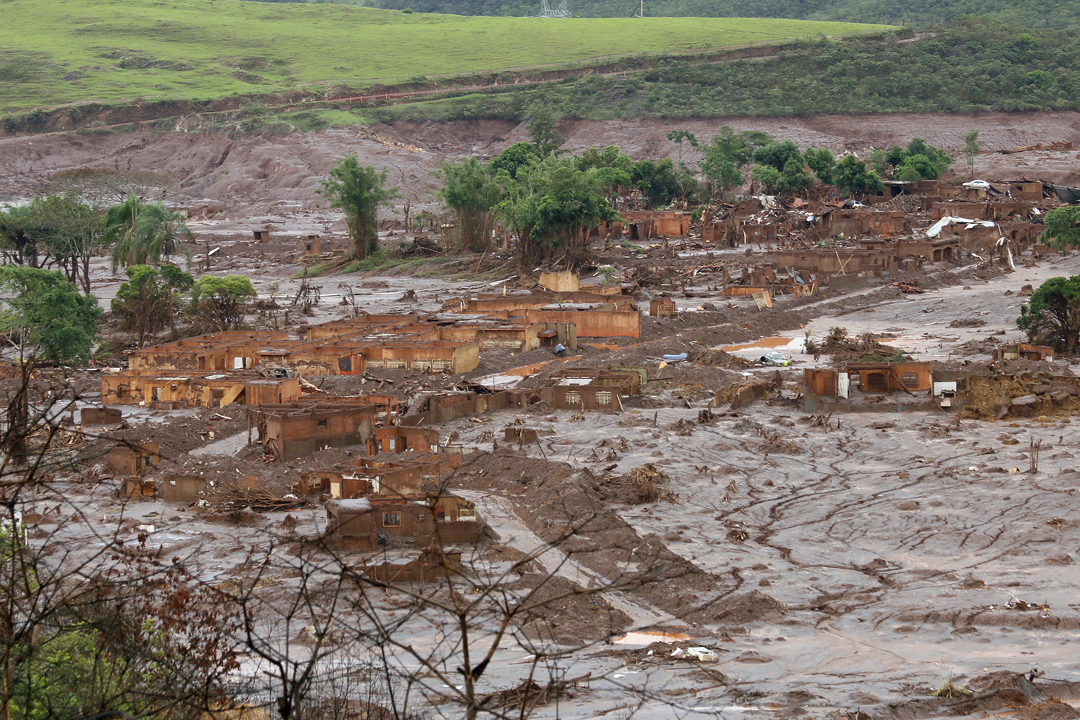
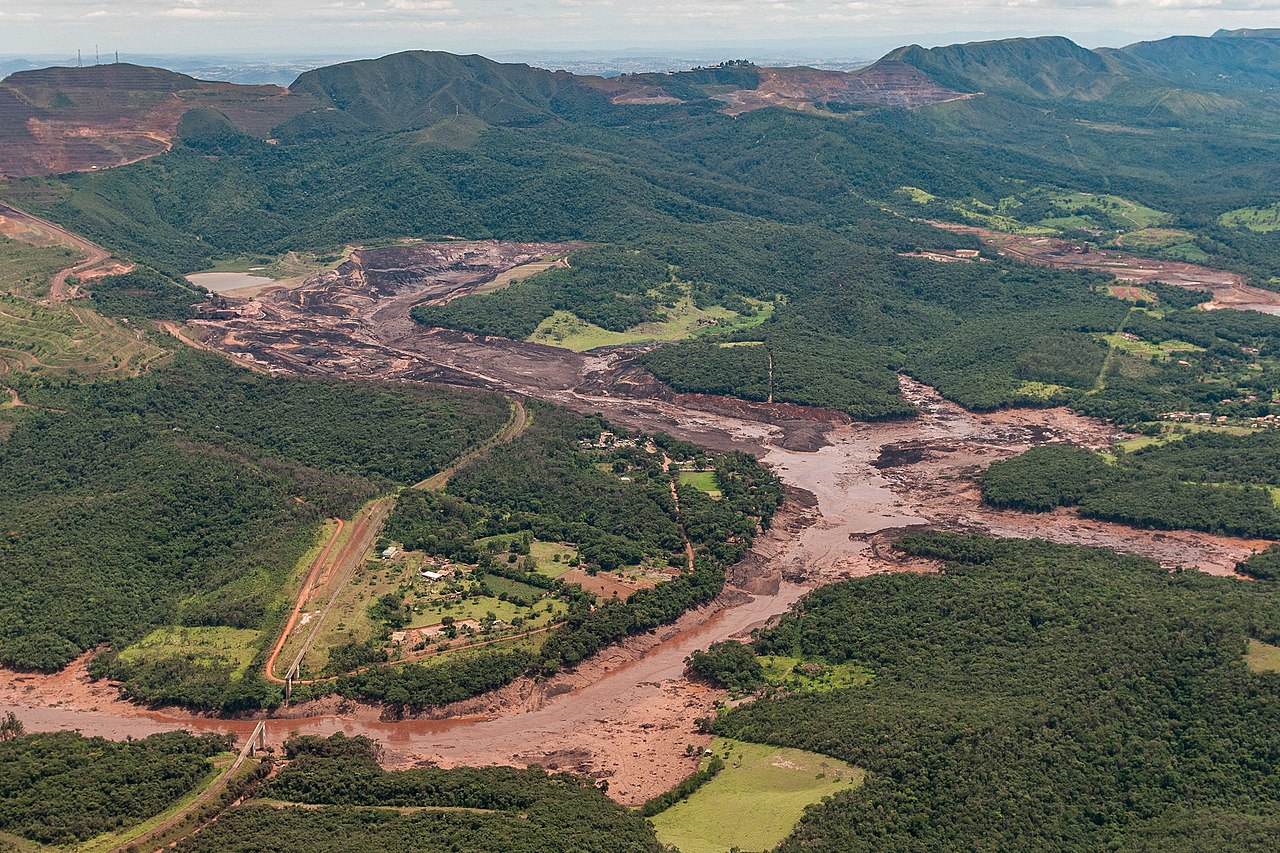
In 2015, the tailings dam for the Germano mine collapsed (sources: 1, 2, 3), releasing 43 million cubic meters of tailings – enough tailings to cover three-quarters of Manhattan in a meter of tailings, or toxic muck past your hips. Initially, a tsunami of toxic mud more than 30 feet tall ripped across the landscape, killing 19 people, displacing 400 families, and leaving half-buried ghost towns. Had the mine been in a less remote part of the world, more people would have been affected. Literally hundreds of watercourses – various branches of rivers and streams that meander through the area – suffered “irreversible environmental damage”. In total, the tailings spread over a total of 415 miles of rivers and streams, including 294 different creeks. The extraordinary amount of tailings released left 65.2 miles of three separate rivers so filled with silt that they were no longer rivers. Eleven tons of riverine fish died immediately from mud clogging their gills. However, tons more fish died from the toxic waste and the drop in oxygen caused by the flood of toxic sludge. The forest on the river banks was badly affected. The area is one of the most important areas of biodiversity in the world, and tapir, birds, turtles, amphibians, and countless invertebrates were killed.
Despite the remote location, 41 municipalities were affected, and hundreds of thousands were left without water in the immediate aftermath. A year after the disaster, the water supply or other aspects of life remained disrupted for 3.6 million people. A hydroelectric dam was put out of service. 13 miles of roads were destroyed as well as 12 bridges. Two archaeological sites, six historically significant sites (including buildings dating to the 1700s), and more than 2000 separate cultural or religious sites were destroyed.
.jpg)
The tailings flowed out of the mouth of the Dolce River into the Atlantic Ocean. A year after the disaster, tailings had contaminated beaches along the coast, including one more than 100 miles away. The toxic plume poisoned animals in the Comboios Biological Preserve, including spawning sea turtles.
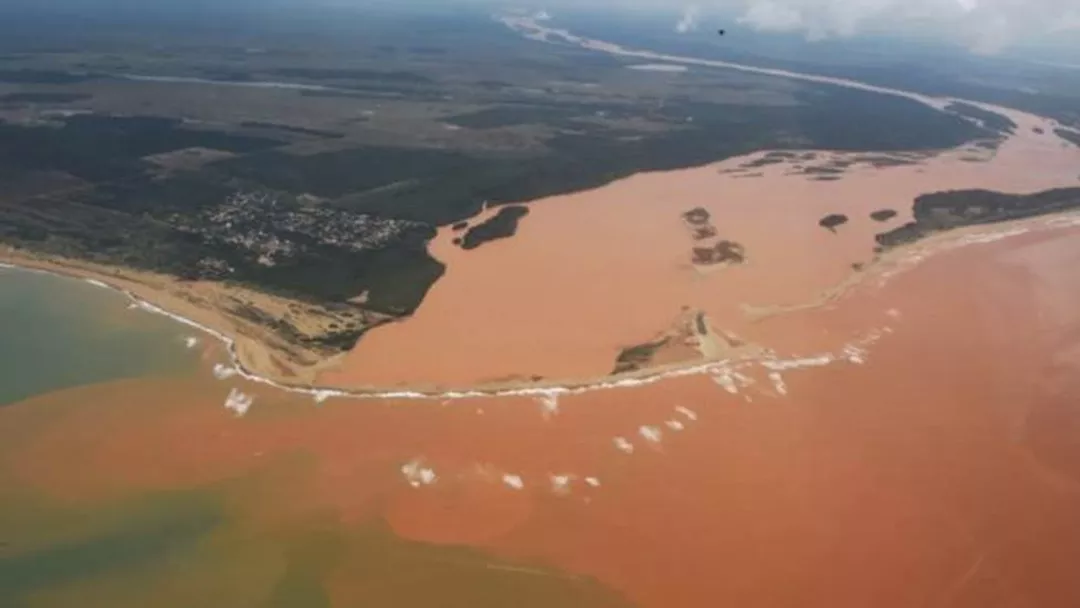
The Germano mine was mining for iron, the main component of steel. As discussed above, all of our green energy candidates require a great deal of steel, though wind and solar require an order of magnitude more steel than nuclear or geothermal.
Far from isolated incidents, well over 100 tailings dam failures have occurred worldwide. These examples illustrate the danger that mining waste poses to human welfare and the natural world. A full green energy transition will require thousands of new mines, each with hundreds of millions of tons of tailings that need to be safely impounded.
Unlike spent nuclear fuel, tailings do not become less dangerous over time. As discussed in this issue’s introduction, 97% of spent nuclear fuel is no longer radioactive after 300 years; only 3% needs to be sequestered for 10,000 years. At the end of 10,000 years, so many of the radioactive atoms will have undergone their natural decay process that the nuclear waste will be no more radioactive than an ordinary rock (though some atoms decay into toxic heavy metals). By contrast, almost all of the toxins in mining waste do not undergo radioactive decay and thus never become safe: arsenic, lead, cadmium, and chromium, for example, never decay and will be dangerous toxins forever. In other words, billions and billions of tons of tailings will need to be safely stored and monitored, forever.
.jpg)
The issue of mining waste is by far the biggest challenge – technologically and environmentally – of the green energy transition. For this reason, much of this issue focuses on mining waste. But before continuing the discussion of mining waste, we need to wrap up our green energy duel. We’ll first judge the winner in the waste category, then determine the winner overall.
Which form of green energy generates the least waste?
To answer the question posed by this section, geothermal generates the least amount of waste, followed by nuclear, with solar and wind in a distant third and fourth. Primarily, wind and solar generate the most waste because of the sheer number of panels and turbines required. As discussed above, a single nuclear power plant can generate the electricity of 8.5 million solar panels or 800 wind turbines. Additionally, enormous resources are required to build transmission lines to collect all the electricity from hundreds of turbines or millions of panels, a problem neither nuclear nor geothermal face. Between wind and solar, wind power generates substantially more waste because wind turbines require rare earths, and rare earth mining generates an astonishing amount of radioactive waste. We consider this thorny issue in greater detail in Chapter 2.
For nuclear energy, the radioactive waste from spent nuclear fuel gets a disproportionate amount of attention. But clearly, uranium mining waste is an orders of magnitude larger problem. As discussed in this issue’s introduction, all 92 nuclear power plants (54 active plus 38 decommissioned) that have ever been operated since the 1950s combined have generated a total of 90,000 metric tons of spent nuclear fuel waste. Remember, a single modern mine produces hundreds of millions of tons of tailings. In other words, the entirety of nuclear waste ever produced by every single nuclear power plant in the US is well under one-tenth of one percent of the radioactive toxic waste produced by a single modern mine. And, as discussed in the Introduction, 97% of spent nuclear fuel is no longer radiotoxic within 300 years, and much of it decays into harmless substances like zirconium – while mining waste never becomes less dangerous.
Were waste generated by the plants the only waste issue, geothermal would be the clear winner. Older geothermal plants generate only steam as waste, but newer plants generate no waste at all: the fluid used to push the turbines circulates in an endless loop, returning deep underground to heat up after being used to generate electricity.
But as with the section on resource use, this exploration of the waste of green energy reveals how limited our green energy duel really is. The vast majority of mining waste from a green energy transition won’t be a byproduct of the obtaining materials needed to build electricity generation capacity, but rather a byproduct of obtaining the materials needed to make utility-scale batteries and “green” replacements to things that run on fossil fuels, like electric cars. Indeed – as we will investigate in Chapter 3 – the bulk of the demand for minerals – and thus the biggest driver of mining waste in a green energy transition – is electric cars. In sum, the amount of mining waste generated by the green energy transition depends less on how we generate the electricity and more on the fact that we need to charge up electric cars. While geothermal and nuclear may generate less waste than wind and solar, any green energy transition that replaces all of our gasoline-powered cars with electric cars will generate a tremendous amount of mining waste.
Sign up here to be notified when a new issue of Finite is published (4 emails/year). Sign up here to receive every new article of Finite in your inbox as soon as it is published.
Putting all this together, no matter how we choose to generate green energy, a green energy transition will require opening thousands of new mines, each of them generating hundreds of millions of tons of toxic tailings waste – waste that will be toxic forever.
Green energy duel conclusion: losing sight of the forest (because it was destroyed by mining)
In order to plan out a just transition away from fossil fuels, it is necessary to see the big picture – not to lose sight of the forest because we’ve focused on a particular set of trees. We have so far seen this in two different ways.
First, it felt logical to end the green energy duel when we realized that nuclear energy is not renewable. However, ending the comparison there would have overlooked the material inputs and environmental harm of a green energy transition. Specifically, solar and wind energy may be renewable, but both have significant drawbacks (massively larger resource requirements, footprint, and mining waste). These drawbacks don’t eliminate wind and solar from contention, but as we saw from examples like the Ivanpah solar farm and the collapse of the Germano tailings impoundment, we must have a plan to manage those problems. Second, when we focused on an overall winner – which type of energy is the most environmentally friendly – we lost sight of the fact that most of the material inputs and waste of a green energy transition are not actually destined for generating electricity. The biggest need for minerals (and thus the biggest contributor to mining waste) is electric cars, due to the large amount of minerals needed to manufacture electric cars themselves, plus all the material inputs needed to generate the extraordinary amount of electricity to keep them charged up and running.
But there is a third way we can easily miss the big picture. When we dive in headfirst and start planning out our green energy transition, we fail to ask more fundamental questions about how our world should work. For example, we never considered the possibility that perhaps we don’t need all the energy we think we do. Maybe there is a different way to run the world. Maybe we can maintain our high quality of life and use less energy. We consider this possibility in Chapters 3 and 4. But first, we need to fully understand the problem of mining waste.
(Continued in Ch2/part2)